
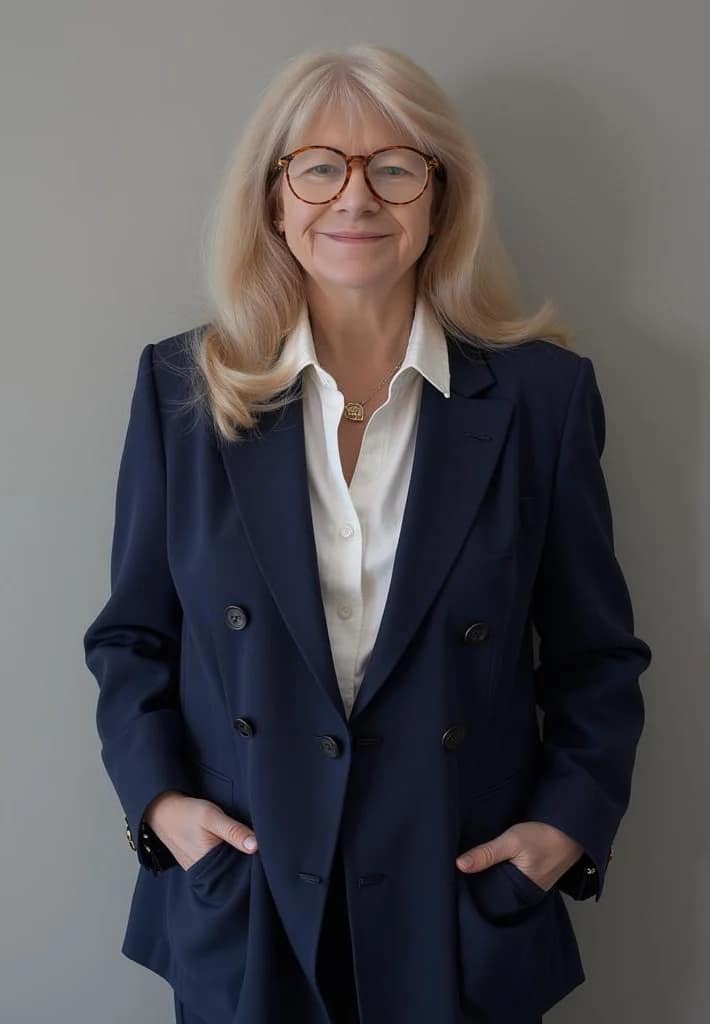
I’m an average American who has dreams, works hard, and wants a good life. Simple as that. But as we all know, life isn’t simple. It can be hard. That’s what I write about: my experiences, my observations, how I’ve grown, the mistakes I’ve made, and what I’ve learned along the way. These things shape how I see the world and how I write about it.
Born into a Midwestern farm family, I spent my first years on our family farm in Kansas with brothers, sisters, lots of animals, and plenty of hard work. When my dad suffered a serious back injury, he was laid up for months. Unable to continue farming, our family moved to Phoenix, where I spent the rest of my childhood. I was always finding ways to earn money—cleaning, babysitting, sewing, and selling baked goods—because when you have five siblings, the pickings are slim.
I worked my way through college and began my career as an accountant at Intel. From there, I moved into sales and spent approximately 20 years in Silicon Valley selling IT projects during a time when the computer industry was emerging and constantly changing. Imagine calling on companies such as Sun Microsystems, Oracle, Apple, Applied Materials, HP, Adobe, NEC, Intel, Foster Farms, and Gallo—and becoming part of the projects they were building.
On many days, I visited two or more companies. Even using two visits a day and approximately 200 working days a year as a conservative estimate, that adds up to roughly 8,000 firsthand encounters with companies, executives, project managers, consultants, systems, and problems. Many of those visits were to projects I was already working on. I stayed involved, learned how the work was progressing, and helped address problems as they emerged. At the same time, those visits introduced me to other opportunities within the same company—different divisions, plants, projects, technologies, budgets, funding sources, executives, and managers.
Of course, the polished business version leaves out what some days actually sounded like in my head: “Oh, for God’s sake—Johnny and the project manager are fighting again, the deadline is slipping, and now the customer is pissed. Let me go fix it.” And I did. Selling a solution didn’t end when the contract was signed. It meant managing relationships, resolving conflicts, protecting the customer’s project, and keeping the people and technology moving in the same direction.
Every project required me to understand what the company needed to accomplish, which technical skills were required, and how emerging technology could be used to create the right solution. Much of my work was with senior executives and project managers, and I learned to look at a problem from the executive’s point of view and understand how one project affected the company as a whole. I wasn’t selling a product. I was selling a solution—and the people and technology needed to make it work. I was in heaven. I learned every single day.
In the mid-1990s, I founded an SAP consulting and software company. I grew it to approximately $5 million in revenue during its first year and managed consultants working on projects across technology, manufacturing, energy, finance, and consumer products. We also developed software connecting SAP and Primavera systems for oil and gas companies.
In 2008, I was diagnosed with lung cancer, despite never having smoked a day in my life. The health insurance covering my entire company was canceled because, I was told, my medical claims exceeded the company’s premiums. I paid for my care, fought the cancer, and today I am cancer-free. Much of the financial security I had built went with it. That is how healthcare can work in America—the richest country in the world.
When these health problems forced me to change direction, sales and marketing were the obvious choice. I created Geeks Marketing and have since worked with more than 100 businesses on branding, messaging, websites, sales funnels, and marketing. I later created Graphic Designer Geeks, concentrating on branding, business graphics, and how companies communicate with their customers. Branding was a natural progression from my 20 years of exposure to companies and IT projects. That experience taught me that branding isn’t just a slogan, a logo, or a marketing direction. It reflects how a company operates and presents itself to the world—and it almost always starts at the CEO level.
But I am alive and kicking, and I am using this renewed life to share my experiences through my writing. What happened to me—the cancellation of my health insurance and the subsequent loss of earnings—was not an abstract policy failure. It was real, and similar things happen to ordinary Americans every day. This setback opened the door to writing about the systems, decisions, and injustices shaping our lives.
Politics was not where I expected my life to lead. But politics determines how we choose to live, and I want to be part of the solution. I wrote Is America the Greatest? It Can Be. to examine what America has become, how we got here, and what must change. I founded Politically Yours to bring news sources, journalists, podcasters, political commentary, legal resources, petitions, events, and citizen voices together in one place.
I created Red, White & Sue as my own voice—a place to write about politics, democracy, corporate power, the economy, healthcare, food safety, and current events through my experiences, observations, and research. I currently write for political candidates and organizations and am working on The Billionaire Systems, which should be published in 2027.
I am not a politician, academic, or Washington insider. I am an American who has worked, built businesses, succeeded, struggled, paid attention, and decided to write about what I see.